

-
Products
-
-
-
-
Contact Us
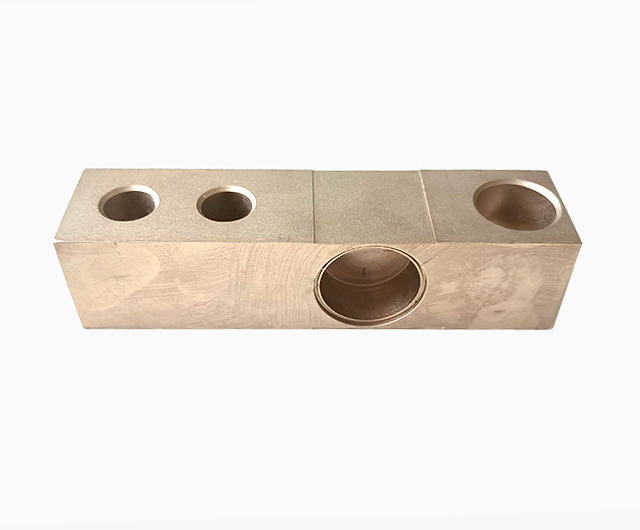
How do weighing sensors work?
2025-10-20
- Weighing Sensor Structure and Function
Weighing sensors are commonly used for measuring weight and have become an integral part of our daily lives. You can find them everywhere—whether at supermarket counters or along highways. Of course, you usually don’t notice them right away, as they’re often hidden inside the devices themselves.
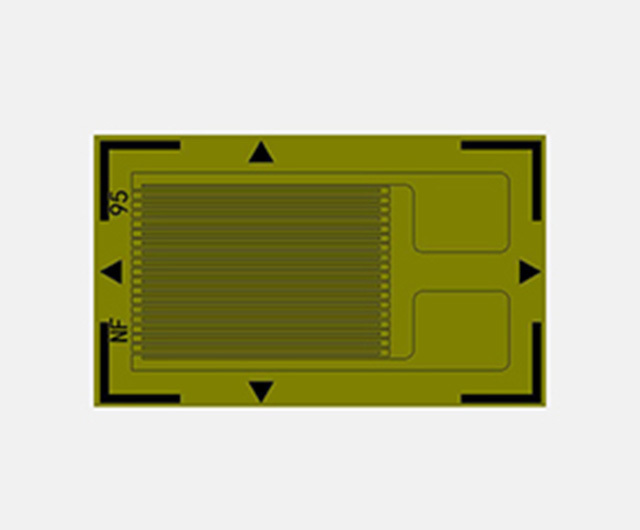
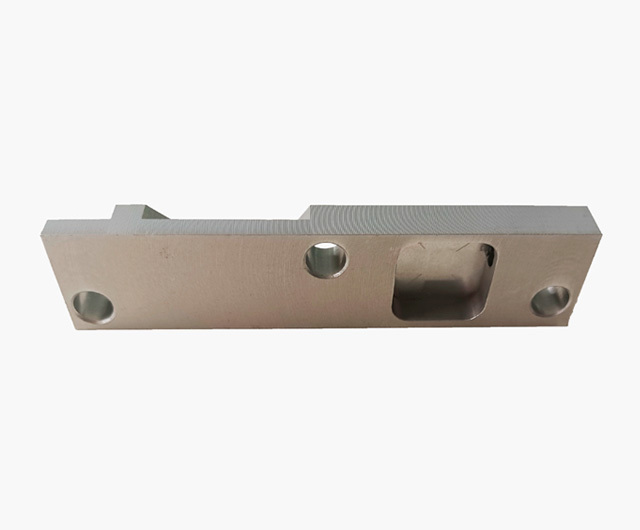
A weighing sensor consists of an elastic body equipped with strain gauges. The elastic body is typically made from steel or aluminum—materials that are both robust and exhibit extremely small elastic deformations. As the term "elastic body" suggests, steel or aluminum will undergo a certain amount of deformation under load, but they subsequently return to their original position, responding elastically to each applied force. These minuscule changes can be precisely measured by the strain gauges. The deformation detected by the strain gauges is then interpreted by electronic instruments to accurately determine the weight.
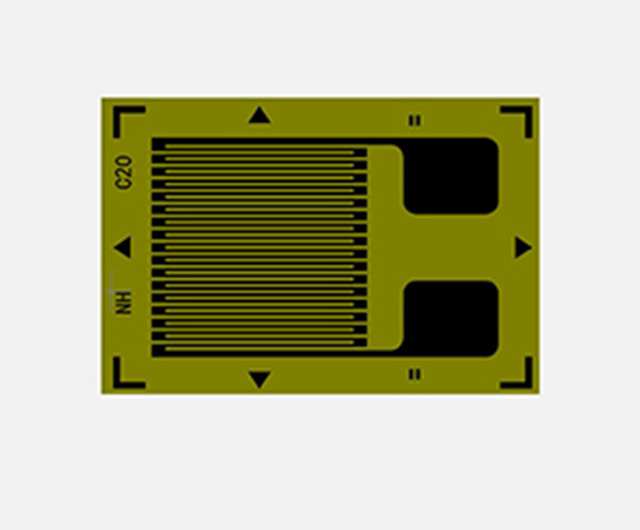
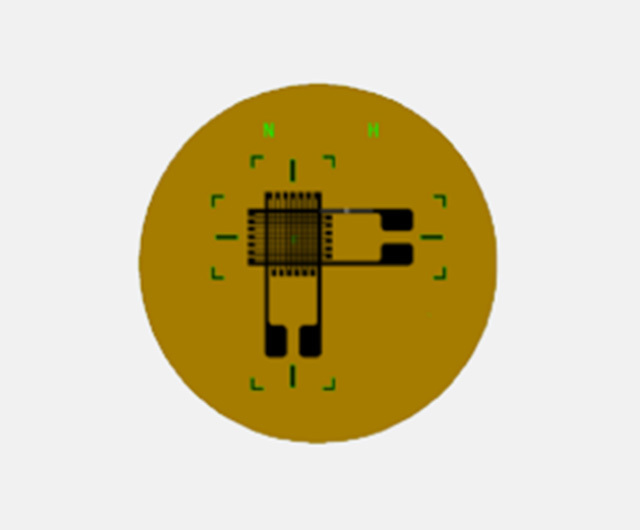
To understand the final point, we need to explain strain gauges in more detail: they are electrical conductors firmly attached to a substrate in a meandering pattern. When the substrate is stretched, both the substrate and the conductor elongate together. Conversely, when the substrate contracts, the conductor shortens as well. This causes a change in the electrical resistance of the conductor.
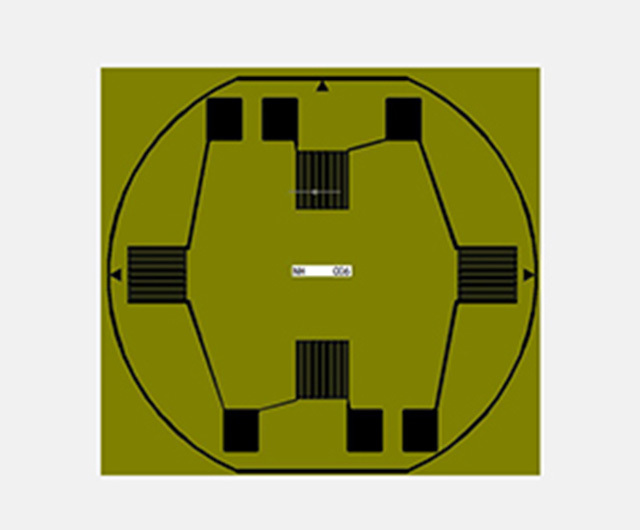
The strain gauges are securely attached to the elastomer, ensuring they undergo the same deformation. In the case of load cells, these strain gauges are arranged in a Wheatstone bridge circuit (see figure). 1 ). This means that four strain gauges are connected to form a bridge circuit, and the direction of the measured force is aligned accordingly with the measuring grid wires.
If an object is placed on or suspended from a weighing sensor, its weight can be determined. The expected load on the weighing sensor always acts along the direction toward Earth's center—specifically, in the direction of gravity. That is, it can only measure the force component in the direction of gravitational load. However, force sensors work differently—despite their similar design—since they are capable of capturing loads occurring in all directions. It is independent of the direction of Earth's gravity and the installation method.
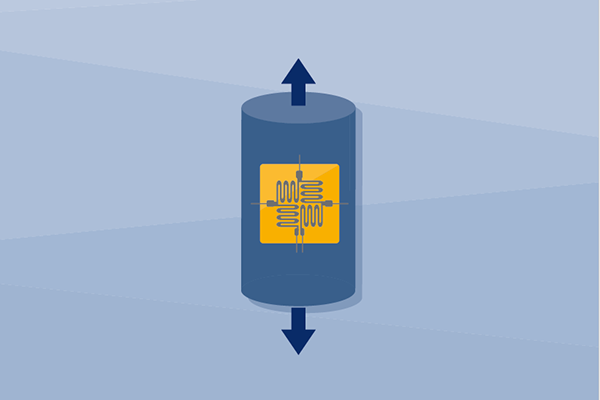
Figure 1: Wheatstone bridge circuit, where the bridge is composed of four strain gauges connected together.
- Weighing Sensor Types
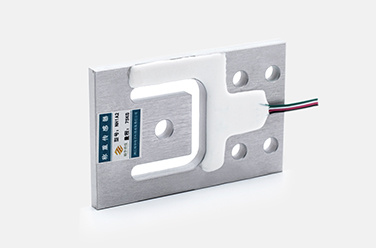
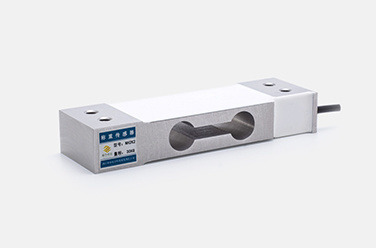
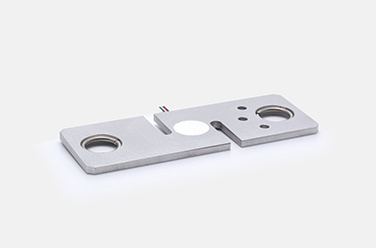
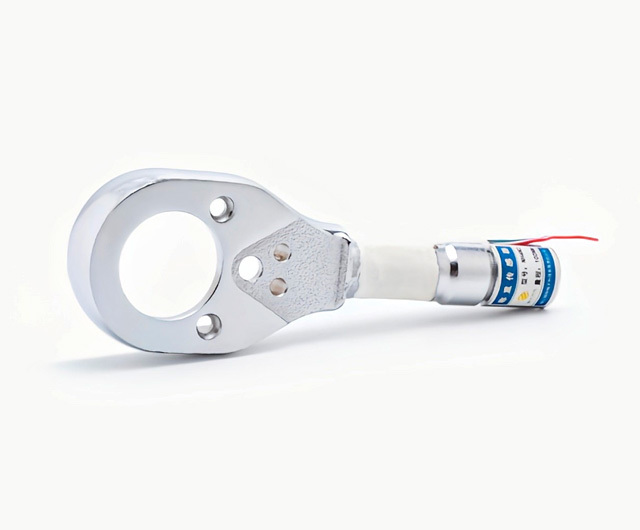
Weighing sensors come in various types to suit different applications.
Commonly used include:
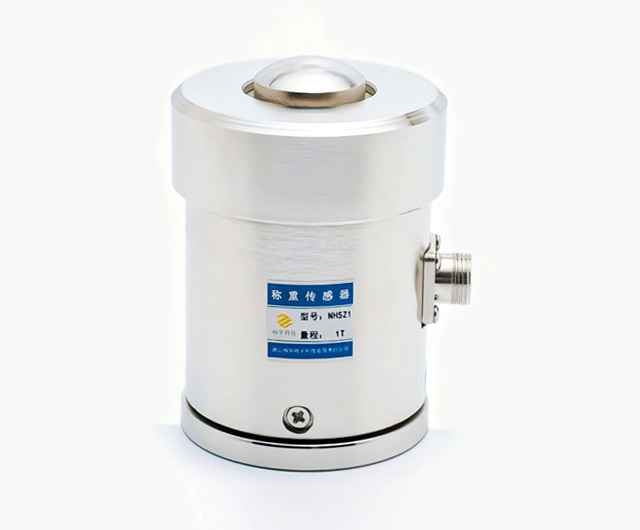
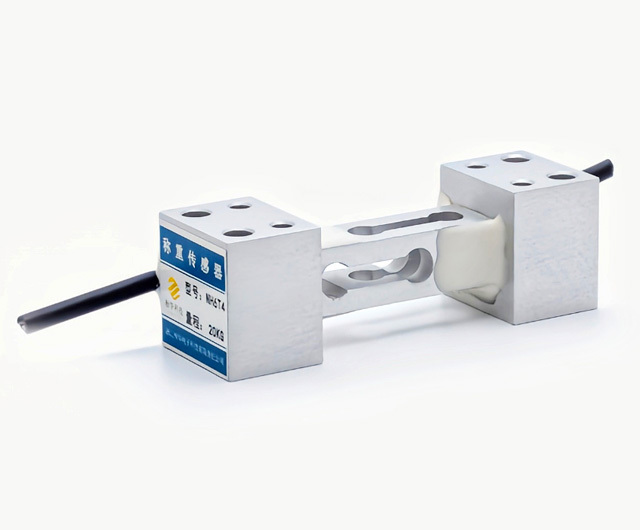
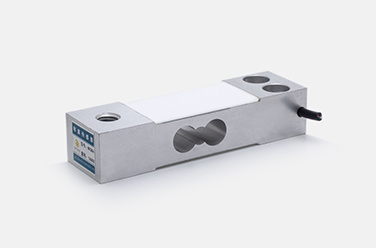
Single-point weighing sensor : Generally used for platform scales, which are placed beneath heavy objects.
Compression Force Sensor : Multiple large-capacity load cells are placed beneath the steel structure and loaded from above.
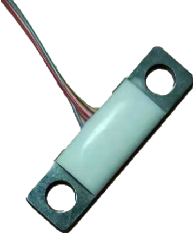
Tension Load Cell : Heavy objects are suspended beneath one or more sensors.
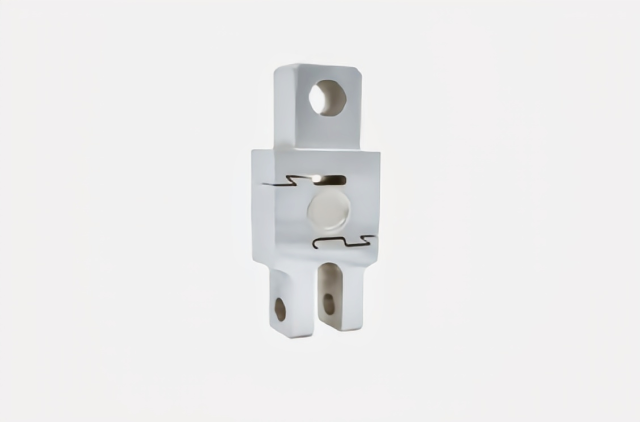
Weighing sensors have other features as well, such as special structures or characteristics, depending on the specific application. For instance, if the system requires thorough daily cleaning, the weighing sensor would need a higher level of protection and enhanced sealing capabilities.
Weighing sensors can also be classified according to the type of signal they transmit: digital weighing sensors have built-in electronic components that process measurement results and then display and send the data. In contrast, analog weighing sensors require additional equipment—a measuring amplifier—to function properly.
Four strain gauges are fixed onto the load cell below, and they will deform when a force is applied. The direction of the arrow indicates the direction in which the force is being applied.
- The Influence of the Environment on Weighing Sensors
Environment It is a key factor determining the measurement accuracy, stability, and lifespan of load cells. Various environmental variables can disrupt the performance of sensitive components, affect signal transmission, or compromise structural integrity, leading to data deviations or even equipment failure. The core impacts are concentrated across six major dimensions:
Temperature It is the primary interfering factor—high temperatures cause thermal expansion of the elastomer, lead to resistance drift in strain gauges, and accelerate aging of the encapsulation; meanwhile, low temperatures reduce the elastomer's toughness, resulting in cracking of the insulation layer in the signal pathway. Moreover, temperature gradients can even trigger thermal zero-point drift, particularly critical in high-precision applications where tolerances are as low as ± 5 A fluctuation of ℃ could easily lead to data failure.
Humidity and Water Vapor Erosion damages equipment, while high humidity causes strain gauges to become damp and elastomers to rust. Condensation or water immersion can directly lead to short circuits in the circuitry. In scenarios such as food processing or outdoor rainy conditions, data fluctuations are prone to occur.
Vibration and Impact: Failure Under Stress Stability , high-frequency vibrations combined with noise in industrial workshops lead to data jitter, and instantaneous impacts such as materials falling may cause permanent deformation of the elastomer, potentially amplifying errors. 3-5 Twice.
Electromagnetic interference This can interfere with the transmission of weak signals; electromagnetic radiation generated by devices such as inverters and welding equipment may cause data fluctuations and transmission interruptions, with analog sensors being particularly affected.
Chemical medium It can corrode the casing and sealing materials, while acidic or alkaline solutions, disinfectants, and other substances accelerate structural damage—therefore, it's essential to select the appropriate option. 316L Protection using special materials such as stainless steel.
Furthermore, High-altitude atmospheric pressure changes Even minor errors in high-precision measurements must be compensated and offset through algorithms, as targeted protection is key to ensuring sensor performance.
- Weight Sensor Technology Trends
1. Intelligentization With the advancement of IoT technology, weighing sensors are gradually gaining intelligent capabilities. They can not only perform basic weight measurements but also upload data to cloud servers in real time, enabling remote monitoring and management. Meanwhile, by embedding AI Algorithms and sensors enable dynamic error compensation, load pattern recognition, and predictive maintenance, shifting the approach from "passive measurement" to "proactive prediction," thereby significantly enhancing the overall reliability of the system.
2. Enhanced Precision and Stability : Industries are increasingly demanding higher weighing accuracy—particularly in sectors like pharmaceuticals and aerospace, where even minor errors can lead to severe consequences. Modern weighing sensors achieve enhanced precision and stability by incorporating advanced digital signal-processing techniques, such as digital filtering and automatic calibration, along with optimized sensor designs and manufacturing processes. As a result, their linearity error can be as low as ≤ 0.02% FS (Full scale).
3 . Miniaturization and Integration : MEMS The application of advanced manufacturing techniques has enabled weight sensors to be miniaturized down to the millimeter level, while also integrating functional modules such as temperature compensation and signal conditioning into a single unit—resulting in a "sensor-as-chip" design. This highly miniaturized and integrated weight sensor opens up new possibilities for applications like gait analysis in wearable devices and real-time biofluid monitoring in medical implants.
4. Applications of Materials Science and Nanotechnology The continuous development of new materials, such as nanocomposites and high-performance ceramics, has endowed weighing sensors with superior mechanical performance and stability, while also reducing production costs. Moreover, the application of nanotechnology enables these sensors to achieve miniaturization and multifunctionality, further expanding their range of applications.
5. Multi-sensor data fusion In some complex application scenarios, a single weighing sensor may not be sufficient to meet the requirements, which is why multi-sensor data fusion technology has gradually gained prominence. By combining weighing sensors with other types of sensors—such as temperature sensors and humidity sensors—more multidimensional data can be collected and comprehensively analyzed, enabling more accurate measurements and holistic monitoring.
6. Enhanced Adaptability to Extreme Environments In extreme environments such as deep-sea exploration, aerospace applications, and high-temperature, high-pressure conditions, greater demands are placed on the performance and reliability of weighing sensors. By developing innovative nanomaterials and advanced packaging techniques, we can enhance the sensors' anti-interference capabilities and their ability to withstand harsh environmental conditions, enabling them to operate reliably even under extreme circumstances.
Previous page
More news

Hotline
Technical Support
Address
No. 1, Building 1, Yin Cang Road, Green Industry Cluster, Quzhou City, Zhejiang Province
Follow us



Copyright © 2024 Zhejiang Nan Hua Electronic Technology Co., Ltd. | Powered by www.300.cn