

-
Products
-
-
-
-
Contact Us
Analysis of the Main Technical Approaches for Flexible Stretchable Strain Sensors
2025-10-13
One
Introduction
Flexible stretchable strain sensors, as core components in the field of flexible electronics, are driving transformative advancements that are profoundly reshaping numerous application areas such as human-machine interaction, health monitoring, and smart wearable technologies. Compared to traditional rigid sensors, these flexible stretchable strain sensors boast unique features like bendability, stretchability, and torsional flexibility, enabling them to seamlessly integrate with human bodies or irregular surfaces. This integration facilitates natural, comfortable, and continuous monitoring of physiological and motion-related signals. This article aims to systematically review the technological pathways of these sensors, offering a comprehensive analysis that spans from foundational materials and sensing mechanisms to microstructural design, fabrication techniques, system integration, and cutting-edge challenges across the entire value chain.
Two
Classified by sensing mechanism
Flexible stretch strain sensors are primarily categorized into resistive and capacitive types. Although several other types of strain sensors exist—such as Bragg fiber, Raman shift, triboelectric, and ionic piezoelectric sensors—they are used in skin-mounted and wearable sensor applications. However, these sensors face significant challenges due to their complex measurement systems, low resolution, and poor dynamic performance. On the other hand, resistive and Capacitive sensor Featuring low production costs, excellent performance, simple signal readout, and wide-ranging applications, this article focuses solely on two types of stretchable strain sensors: resistive and capacitive—as well as a liquid-metal stretchable strain sensor based on the resistance principle.
Three
Main Technical Approach
1. Resistive Stretch Strain Sensor
The resistive-type tensile strain sensor consists of a conductive-sensitive layer coupled with a flexible substrate, and its resistance undergoes controllable changes in response to the applied strain during stretching.
1.1 Material System
The core of a resistive sensor is an integrated system consisting of conductive sensitive materials combined with a flexible substrate. The conductive materials primarily include:
Carbon-based materials: The primary conductive networks are formed by carbon nanotubes (CNTs), graphene and its derivatives, carbon black, and more. Carbon nanotube paper-PDMS composites can achieve conductivity as high as 10 ⁴ The sensitivity factor.
Metal materials: Metal nanowires (such as silver nanowires), nanoparticles and thin films, as well as liquid metals, offer high Electrical conductivity But its stretchability is limited.
Composite Conductive Material: Conductive polymers (such as PEDOT:PSS), when combined with elastomers, create composites that balance electrical conductivity with mechanical performance.
Base material: Primarily uses polydimethylsiloxane ( PDMS ), Ecoflex 、 Polyurethane (PU) Elastomers that provide flexible support and stretchability.
1.2 Structural Design
The structural design of resistive sensors aims to optimize the strain-resistance response characteristics:
Microstructural Design: Folded, helical, and porous structures are achieved through pre-strain treatment, significantly enhancing both tensile strength and stability.
Multilayer composite structure: The sandwich structure places a conductive layer between elastomers, protecting the conductive network and enhancing durability.
Crack propagation structure: By leveraging the micro-crack propagation mechanism of metal films, high-sensitivity sensing is achieved.
1.3 Manufacturing Process
Manufacturing processes directly influence sensor performance and scalability:
Nanomaterial Integration Process: Conductive materials are integrated onto an elastic substrate using filtration transfer, spin coating, and spray-coating techniques.
Patterned Technology: Photolithography and laser etching are used to define precise sensing areas and electrode patterns.
Printed Electronics Technology: Screen printing and 3D printing are emerging as viable solutions for low-cost, mass production.
1.4 Performance Characteristics
Resistive sensors have a wide range of performance parameters:
Gauge Factor Typically 2–20, but can reach 10³–10³ under extreme conditions. ⁴ 。
Stretchable range: Generally ranging from 2% to 100%, specially designed versions can reach over 300%.
Response time: Typically <200ms, with the fastest response time reaching 19.6ms.
1.5 Represents the company: Images Scientific
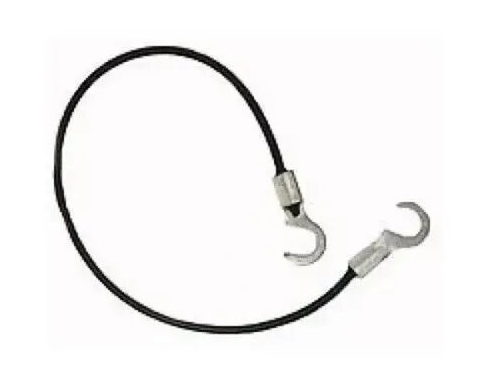
Images Scientific The flexible tensile strain sensor is a device specifically designed to measure tension, displacement, and force, featuring a flexible cylindrical cable design. It belongs to the family of resistive strain sensors and is widely used in robotics, wearable devices, and human-machine interaction applications. This sensor can intuitively convert physical stretching into changes in electrical signals, making it easy to monitor in real time and collect data efficiently.
The sensor operates based on a resistance-changing mechanism: when in its unstretched (relaxed) state, the resistance is approximately 1000 ohms per inch; however, as it’s stretched, the resistance increases linearly—reaching about 2000 ohms per inch when stretched to 150% of its original length (e.g., stretching a 6-inch version to 9 inches). This linear response ensures high measurement accuracy and repeatability, making it ideal for continuous dynamic monitoring. The recommended operating range is between 40% and 50% of the original length to prevent excessive stretching that could compromise stability.
2. Capacitive Flexible Stretch Strain Sensor
The capacitive flexible stretch strain sensor employs a highly compatible dielectric layer, sandblasted between a pair of stretchable electrodes. When subjected to tensile strain, the distance between the two electrodes—and consequently their overlapping area—changes, leading to a variation in capacitance.
2.1 Material System
Capacitive sensors employ a sandwich structure consisting of electrode-dielectric-electrode.
Electrode material: Silver nanowires (AgNWs), carbon-based materials (CNTs, graphene), and conductive fabrics are the mainstream choices.
Media material: Elastomers such as PDMS and Ecoflex, used as dielectric layers, directly influence sensitivity through their dielectric constants and deformability.
New-type dielectric material: Ion gels and composite dielectric materials (with added ceramic/piezoelectric fillers) can significantly enhance performance.
2.2 Structural Design
The structural design focuses on enhancing the capacitance variation rate and linear response.
Electrode Geometry Optimization: Snake-like, wave-like, and pleated electrode designs reduce stress concentration and enhance stretchability.
Microstructured dielectric layer: Porous and Microstructured Dielectric Layers Enhance Capacitance Changes During Deformation
Negative Poisson's Ratio Structure: Innovative designs such as the Miura-ori origami structure achieve exceptional strain response and high sensitivity.
2.3 Manufacturing Process
The manufacturing process of capacitive sensors requires high interlayer alignment accuracy:
Micro- and nanofabrication technology: Lithography and micro-molding techniques for fabricating precisely defined electrodes and dielectric layers
Transfer Printing Technology: Transfer the pre-fabricated electrode onto an elastic substrate, ensuring interfacial integrity.
Multi-layer integration process: Sequential deposition and lamination techniques enable the reliable integration of a sandwich structure.
2.4 Performance Characteristics
Capacitive sensors possess unique performance characteristics:
Sensitivity (Gauge Factor): The theoretical limit is 1, but through geometric engineering, it can reach 2–60; in extreme cases, reported values have even soared as high as 3,933.
Stretchable range: Typically 50%-100%, optimized designs can reach up to 800%.
Response time: Generally within the range of 62–220 ms
Linearity: Clearly superior to resistive sensors, with minimal hysteresis and excellent repeatability.
2.5 Represents the company: Ningbo Renhe Technology
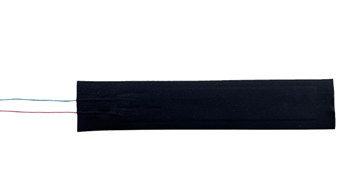
Ningbo Renhe Technology As a pioneer in domestic flexible electronics technology, we have developed a series of elastic tensile sensors based on capacitive principles (ESSA-01, ESSB-01). These technologies are rooted in research achievements from the Ningbo Institute of Materials Technology and Engineering, Chinese Academy of Sciences, and have already been granted nearly 100 authorized invention patents.
The flexible stretch sensor features a self-developed elastic nanocomposite conductive material as its core sensing element, with textile materials serving as the encapsulation layer. It can be seamlessly integrated onto the surfaces of elastic materials such as textiles and leather, offering exceptional elasticity, high sensitivity, and rapid response capabilities. Paired with a high-precision wireless detection system and advanced algorithms, this sensor enables real-time monitoring of parameters like tensile strain, displacement, bending angle, and tensile force. As a result, it finds extensive applications in smart wearables, health monitoring, human-machine interaction, and structural safety assessment, among other fields.
3. Liquid Metal Flexible Strain Sensor
Through specialized processing techniques, such as microchannel molding, liquid metal (LM) is embedded into the microchannels of an elastomer. Under strain-free conditions, LM exhibits high connectivity and low electrical resistance; however, when subjected to tensile deformation, it transitions to reduced connectivity and increased resistance, resulting in a highly linear resistance-strain response. This makes it a resistive-type flexible tensile strain sensor.
3.1 Material System
The liquid metal approach centers on gallium-based alloys, such as EGaIn and Galinstan, as its core materials:
Properties of liquid metal: With high electrical conductivity (3.4 × 10 ⁶ S/m), low toxicity, and room-temperature fluidity
Encapsulation materials: Elastomers such as PDMS and Ecoflex are used to encapsulate the liquid metal, preventing leakage.
Composite Materials: Liquid Metal Combined with Polymers and Nanomaterials to Form Functional Composite Materials
3.2 Structural Design
The structural design of the liquid-metal sensor revolves around its flow characteristics:
Microfluidic channel structure: Embedded microchannels restrict the flow of liquid metal, providing a controllable conductive pathway.
Reconfigurable structure: Utilizing the fluidity of liquid metal to achieve dynamic reconfiguration of sensor shape and functionality
Self-healing structure: Liquid metal automatically fills cracks upon damage, enabling self-healing.
3.3 Manufacturing Process
The fabrication of liquid metal sensors requires special processing techniques:
Microchannel Molding Technology: Soft lithography, laser ablation, and 3D printing for fabricating microchannel templates
Liquid Metal Injection Technology: Vacuum-assisted, pressure injection, and surface treatment ensure that the liquid metal completely fills the microchannels.
Direct patterning technology: Laser pulse activation, magnetic field guidance, and printing technology enable direct patterning of liquid metal.
3.4 Performance Characteristics
Liquid metal sensors demonstrate unique performance advantages:
Sensitivity (Gauge Factor): Typically 2–20, the composite structure can reach 89.5–375.5
Stretchable range: Generally >350%, up to 1400%
Response time: Approximately 158 ms, comparable to the resistive type
Self-healing ability: The resistance recovery rate after injury exceeds 90%, with healing taking anywhere from a few minutes to several hours.
3.5 Represents the company: Liquid Wire
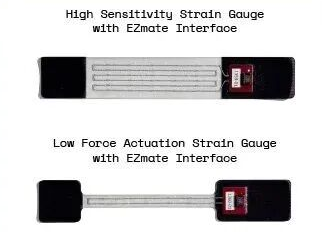
Liquid Wire Company , representing the cutting edge of liquid-metal strain sensors, this technology leverages the patented "Metal Gel™" liquid-metal alloy approach to develop highly durable, stretchable sensor products. These sensors deliver stable performance even under complex deformations such as stretching, bending, and twisting, making them ideal electronic components for industries like robotics, medical devices, smart wearables, and industrial automation. They provide flexible and reliable connectivity and sensing solutions tailored to meet the demands of these dynamic sectors.
The core technology behind Liquid Wire is the Metal Gel™ material, which consists of a liquid metal alloy encased in an elastic TPU structure. This material combines excellent conductivity with remarkable mechanical flexibility, enabling it to maintain stable signal and energy transmission even in complex, dynamic environments. It also boasts high sensitivity and low hysteresis characteristics. The sensor precisely measures minute deformations by detecting changes in resistance as the conductor is subjected to external forces.
Four
Challenges and Future Prospects
1. Technical Challenges
Each technological approach faces specific challenges:
Resistive: The trade-off between sensitivity and stretchability, nonlinear response, and insufficient long-term stability
Capacitive: Intrinsic sensitivity limits, environmental electromagnetic interference, and complex signal demodulation
Liquid Metal: Encapsulation reliability, leakage risk, and manufacturing process complexity
2. Future Development Directions
Future research will focus on the following areas: (for reference only)
Materials Innovation: Developing novel composite materials, such as liquid-metal–nanoparticle hybrid materials and intrinsically stretchable conductors.
Structural Optimization: Biomimetic structural designs (such as pleats and hierarchical porous structures) further enhance performance.
Advanced Manufacturing: Developing scalable manufacturing technologies such as roll-to-roll printing and 4D printing
System Integration: Integrating with artificial intelligence to achieve intelligent sensing, and deeply merging with flexible electronic systems.
Five
Conclusion
The three major technological approaches for flexible stretch strain sensors—resistive, capacitive, and liquid-metal-based—each boast distinct technical features and are suited to specific application scenarios. The resistive approach offers high maturity and exceptional sensitivity, making it ideal for applications requiring precise strain detection. The capacitive approach excels in linearity and stability, perfect for long-term monitoring and dynamic measurements. Meanwhile, the liquid-metal-based approach delivers outstanding stretchability and versatile functionality, making it well-suited for extreme deformation conditions and multi-functional integration needs.
The future development trend will no longer be limited to performance optimization along a single technological path, but rather will shift toward hybrid sensors that integrate the advantages of multiple technologies, as well as sustainable electronic devices featuring self-healing and recyclable properties. With the deepening convergence of materials science, manufacturing technology, and artificial intelligence, flexible stretch strain sensors are poised to play an even more critical role in fields such as health monitoring, soft robotics, and human-machine interaction.
Previous page
Next page
More news

Hotline
Technical Support
Address
No. 1, Building 1, Yin Cang Road, Green Industry Cluster, Quzhou City, Zhejiang Province
Follow us



Copyright © 2024 Zhejiang Nan Hua Electronic Technology Co., Ltd. | Powered by www.300.cn