

-
Products
-
-
-
-
Contact Us
What ensures the machining accuracy of machine tools? You’ll understand it in a flash after watching this!
2026-01-17
The machining accuracy of CNC machine tools ultimately depends on the precision of the machine tool itself. The precision of CNC machine tools includes geometric accuracy, positioning accuracy, repeatability accuracy, and cutting accuracy.
Geometric accuracy—also known as static accuracy—is a comprehensive indicator that reflects the overall geometric shape errors of the key components of a CNC machine tool after assembly.
Positioning accuracy refers to the precision with which the various moving parts of a machine tool can achieve their intended positions under the control of the CNC system. Based on the measured positioning accuracy values, one can determine the best possible machining accuracy that the machine tool can attain during automated processing. It represents the discrepancy between the actual position of a part or tool and its standard position (theoretical or ideal position). The smaller this discrepancy, the higher the precision. Positioning accuracy is a prerequisite for ensuring the machining accuracy of parts.
Repeatability positioning accuracy refers to the degree of consistency in positional accuracy obtained when the same program code is repeatedly executed on a CNC machine. It is the degree of consistency in the consecutive results obtained when machining a batch of parts under identical conditions (on the same CNC machine, with different operating methods but using the same part program).
Cutting accuracy is a comprehensive evaluation of the machine tool's geometric accuracy and positioning accuracy under cutting conditions.
As shown above, the accuracy of CNC machine tools can be evaluated from two aspects: mechanical and electrical. The mechanical aspects include spindle accuracy—such as runout and straightness—as well as the precision of lead screws and the accuracy of fixtures used during machining, not to mention the rigidity of the machine tool itself. On the electrical side, key factors include control methods, such as semi-closed-loop and fully-closed-loop systems, as well as feedback and compensation techniques and the interpolation accuracy during machining. Therefore, the overall accuracy of a machine tool does not depend solely on whether it employs a fully-closed-loop system.
I. Principle Introduction
The kinematic chain of a CNC machine tool includes the CNC controller → servo encoder → servo driver → motor → lead screw → moving components. Depending on the installation location of the position detection device, control systems can be categorized into full-closed-loop control, semi-closed-loop control, and open-loop control.
1. Fully closed-loop control feed servo system
The position detection device—such as a grating ruler or a linear inductive synchronizer—is mounted on the moving components of the machine tool (e.g., the worktable), providing real-time feedback on the position of the moving parts. After being processed by the CNC system, this feedback information is used to inform the servo motor about the current state of the machine tool. The servo motor then automatically compensates for motion errors based on the system instructions. However, since this approach places high-inertia components—such as the lead screw, nut assembly, and machine tool worktable—within the closed-loop control system, tuning the system to achieve stable operation can be quite challenging. Moreover, measurement devices like grating rulers and linear inductive synchronizers are relatively expensive, complex to install, and may potentially induce oscillations. For these reasons, full-closed-loop control is seldom employed in general machine tools.
2. Semi-closed-loop feed servo system
A position detection device is installed at the end of the drive motor or at the end of the lead screw to detect the rotational angle of either the lead screw or the servo motor, thereby indirectly determining the actual position of the machine tool’s moving components and feeding this information back to the control system. Thanks to advancements in mechanical manufacturing technology as well as improvements in the accuracy of speed sensors and lead screw pitch, semi-closed-loop CNC machine tools can now achieve remarkably high feed accuracy. Most machine tool manufacturers have widely adopted semi-closed-loop CNC systems.
II. Practical Applications
1. Fully closed-loop control system
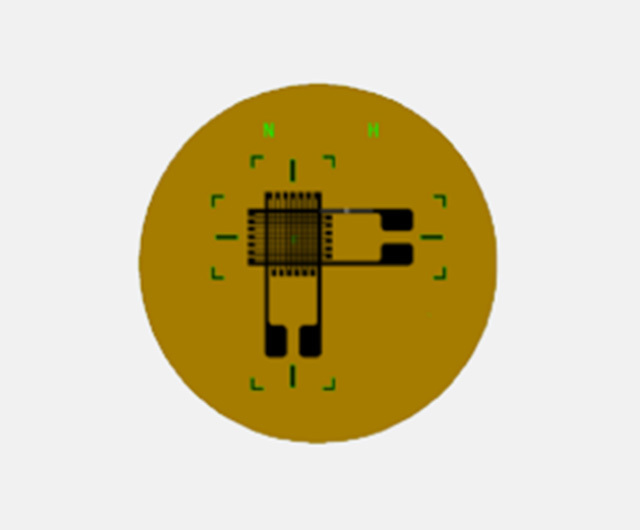
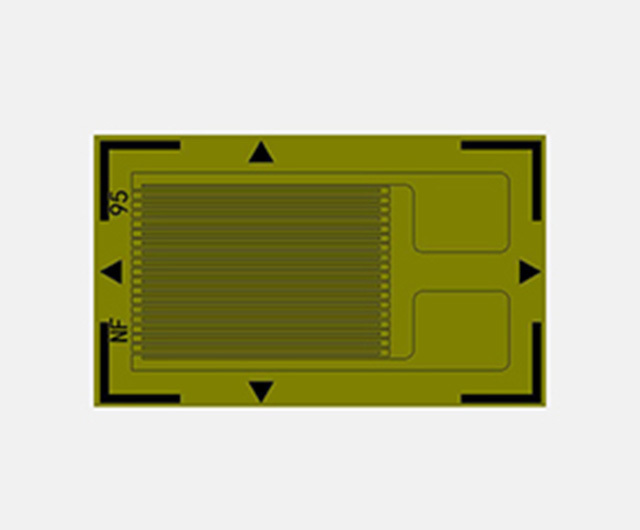
Position detection devices—such as linear scales and linear induction synchronizers—come in different precision grades (±0.01 mm, ±0.005 mm, ±0.003 mm, ±0.02 mm). Consequently, even with closed-loop control, there will still be some error; the accuracy of positioning is influenced by the precision grade of the device.
The thermal performance (thermal deformation) of position detection devices—given that these devices are typically made of non-metallic materials with thermal expansion coefficients that differ from those of the machine tool’s various components—is a critical factor affecting the precision of machine-tool operations. Therefore, it is essential to address the issue of heat generation during machining processes in order to mitigate thermal deformation caused by temperature changes. High-end machine tools employ various methods—including hollow cooling of lead screws, lubrication of guideways, and constant-temperature cooling of cutting fluids—to reduce thermal deformation during machining.
The installation of the position detection device is also critically important. In theory, the closer the device is positioned to the drive axis (the leadscrew assembly), the more accurate the measurement will be. However, due to structural space constraints, there are only two feasible installation methods for grating scales: one is to mount it near the leadscrew assembly side, and the other is to install it on the outer side of the guide rail. It is recommended, whenever possible, to choose the first installation method; yet this approach can make inspection and maintenance less convenient. On the other hand, if a high-precision grating scale is selected but its actual performance fails to meet the precision requirements of the CNC machine tool, even in the first scenario—where the grating scale is installed relatively close to the drive axis—there still remains a certain distance between the scale’s mounting position and the drive axis itself. This distance, combined with the oscillatory motion of the moving object during operation, poses significant challenges to the grating scale’s detection and control. Specifically, when the driven object swings toward the side where the grating scale is mounted, the scale mistakenly perceives the object’s movement as too slow during detection, prompting the system to issue an acceleration signal. But as soon as the driven object immediately swings toward the opposite side, the grating scale again misinterprets the movement as being too fast, causing the system to send a deceleration signal. This back-and-forth cycle repeats continuously, yet instead of improving the control of the CNC machine tool’s linear axes, it actually exacerbates the vibration of the driven object, leading to the peculiar phenomenon that the fully closed-loop system performs worse than the semi-closed-loop system.
Production environment impacts: In general, mechanical processing plants have harsh working environments where dust and vibration are common phenomena. However, grating scales and linear inductive synchronizers are precision components whose operating principle relies on light reflection to measure relative positional changes. Dust and vibration happen to be the biggest factors that compromise measurement accuracy. Moreover, during machining, cutting oil mist and water mist are particularly severe, significantly affecting the performance of grating scales and linear inductive synchronizers. Therefore, it is essential to adopt a fully closed-loop control system. In addition to ensuring proper installation and sealing, we must also take steps to improve the production environment. Otherwise, you’ll encounter this issue: newly installed machine tools initially exhibit good precision, but within less than a year, not only does their accuracy deteriorate, but the machines also frequently trigger alarms.
2. Semi-closed-loop control system
Since the measurement device is installed at the top of the motor or lead screw, it is relatively easy to seal, and thus places no special requirements on the environment. In a semi-closed-loop control system, the accuracy error primarily depends on the backlash between the lead screw’s forward and reverse directions. With advancements in machining technology, the manufacturing processes for imported lead screws have reached a high level today, and the precision fit of high-accuracy lead screw pairs has virtually eliminated backlash. Additionally, during assembly, double-row reverse-ball screw pairs are used, which can completely eliminate any remaining backlash. Furthermore, many machine tool manufacturers adopt a pre-tensioning method when assembling machines, thereby eliminating the impact of thermal deformation on the accuracy of the lead screw drive. As a result, semi-closed-loop control systems today can already ensure that machine tools achieve very high levels of precision.
III. Conclusion
As summarized above, theoretically, if external factors are disregarded, a full-closed-loop control system may achieve higher basic positioning accuracy than a semi-closed-loop control system. However, if issues such as machine tool heating, environmental pollution, temperature rise, vibration, and installation are not adequately addressed, the performance of a full-closed-loop system could actually be inferior to that of a semi-closed-loop system. Although such a system might show some effectiveness in the short term, over time, the effects of dust and temperature fluctuations on the grating scale will severely compromise the accuracy of the measurement feedback data, ultimately rendering the system ineffective. Moreover, once the grating scale encounters problems, it will trigger an alarm, causing the machine tool to stop functioning.
For mid- to low-end machine tools, due to considerations of production costs and competitiveness, the supporting full-closed-loop control systems have been simplified—for example, sealing and temperature-rise control are not adequately ensured. Under these conditions, simply equipping the machine tool with grating scales at considerable cost will not improve its accuracy.
More news

Hotline
Technical Support
Address
No. 1, Building 1, Yin Cang Road, Green Industry Cluster, Quzhou City, Zhejiang Province
Follow us



Copyright © 2024 Zhejiang Nan Hua Electronic Technology Co., Ltd. | Powered by www.300.cn