

-
Products
-
-
-
-
Contact Us
Innovative Power: Force Sensors Driving the Future
2025-11-07
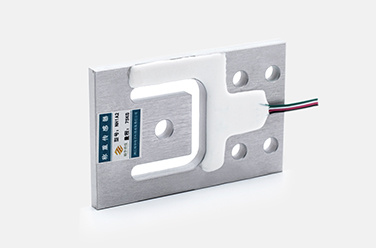
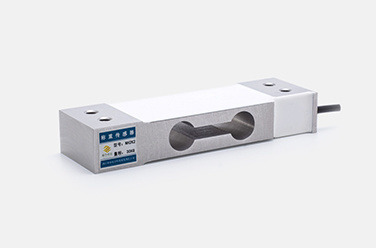
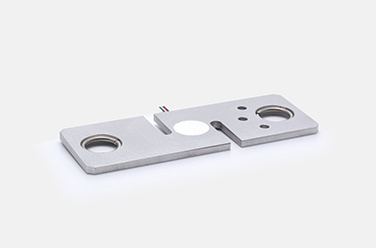
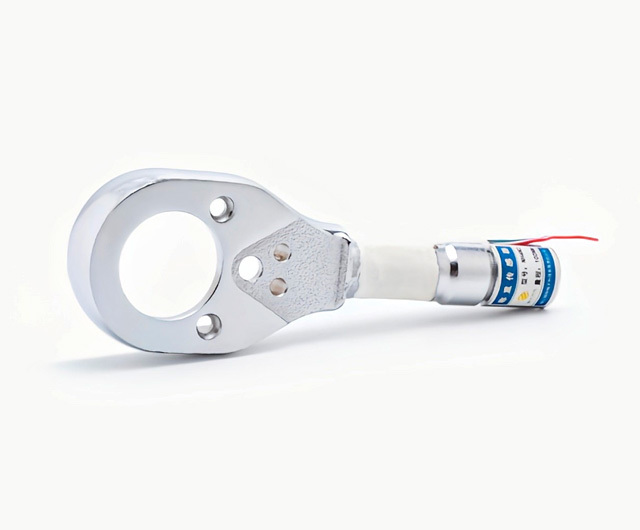
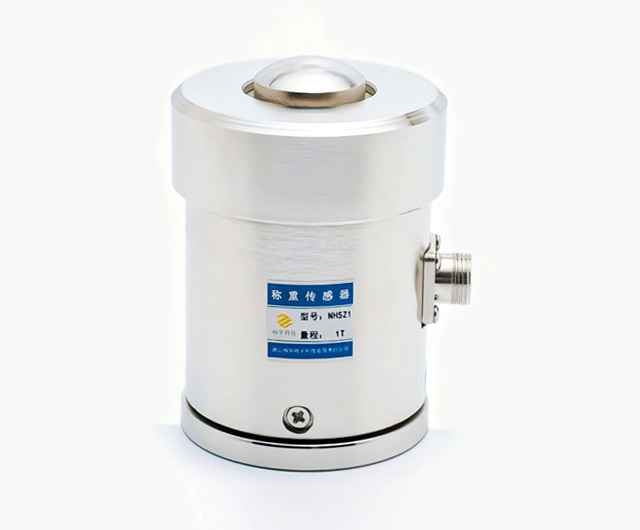
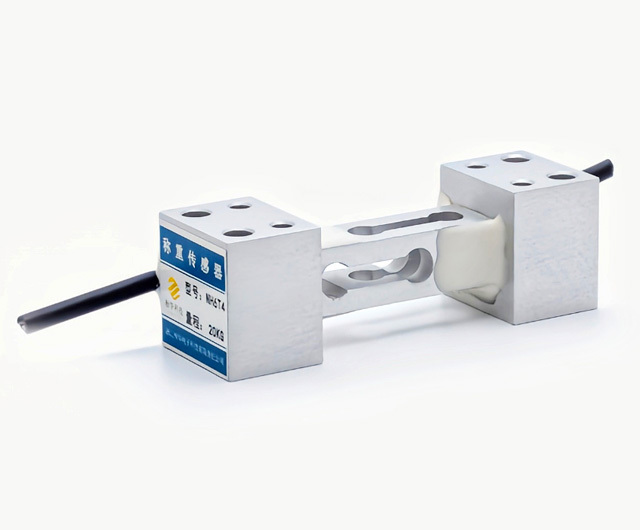
Force sensor It is a type of sensor used to measure force, among which the six-axis force sensor has become the mainstream technology, serving critical industries such as automotive and aerospace. The market for force sensors includes customers like automobile manufacturers, consumer electronics companies, and medical equipment makers—sectors that have stringent requirements for the quality, stability, and precision of these sensors. The force sensor market is highly competitive, with both domestic and international companies leveraging their unique strengths. However, this competitive landscape is also shaped by various factors, including government policies and technological barriers, throughout the industry's development. To meet the growing demand for high performance, cost-effectiveness, and ease of use, companies must continuously refine their products and offer customized solutions, enabling them to enhance competitiveness while ensuring compliance with regulatory standards.
Concepts and Components
A force sensor accurately measures and detects the magnitude and direction of force, primarily consisting of a force-sensitive element, a transduction element, and electronic circuitry. The six-axis force sensor, with its high precision and compact design, plays a vital role in fields such as aerospace and automotive industries.
Overview of Force Sensors A force sensor is a device used to measure and monitor the magnitude and direction of forces, capable of detecting pressure, tension, torque, or compressive forces. It operates by converting the magnitude of the applied force into corresponding electrical signals, which are then measured and analyzed to determine both the intensity and orientation of the force. The accuracy, stability, and cost of a force sensor are key factors that users consider when purchasing such products.
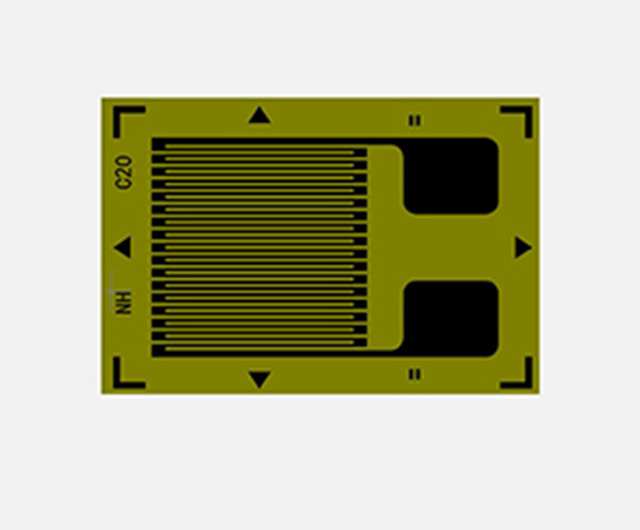
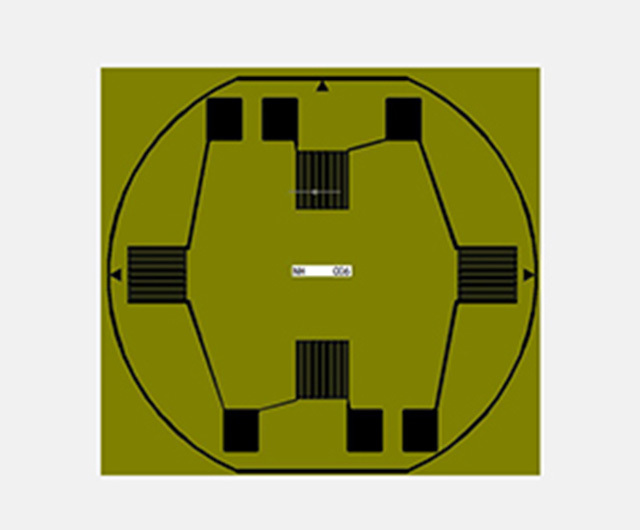
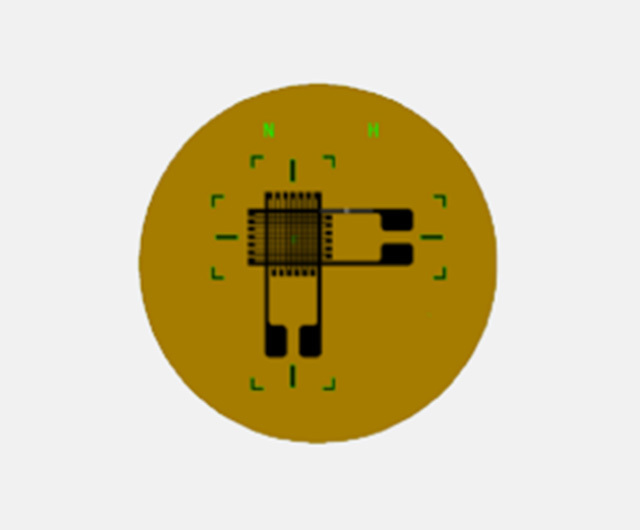
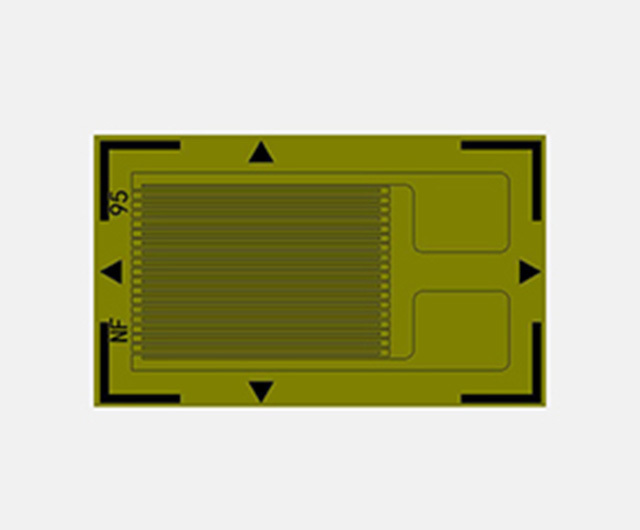
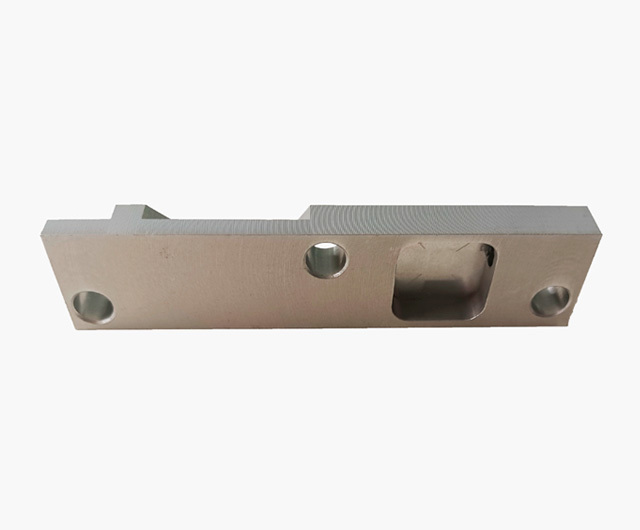
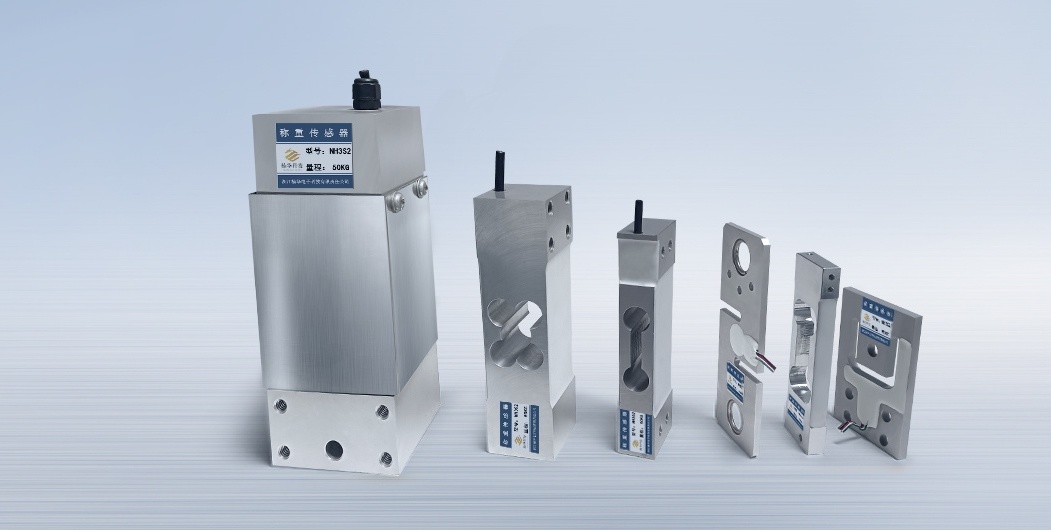
Components of a Force Sensor The force sensor primarily consists of three main parts: the sensing element, the conversion element, and the circuit section. Common materials used for force sensors include aluminum alloy, alloy steel, and stainless steel. Among these, the most widely used conversion element is the resistive strain gauge, while the circuit typically comprises enameled wire and PCB boards.
Six-axis force sensors are becoming mainstream. A six-axis force sensor is a device capable of simultaneously measuring forces along the X, Y, and Z axes, as well as torques around each axis. Through its internal algorithms, it decouples interference from forces and torques in each direction, delivering more comprehensive feedback on tactile information. As such, it stands out as the most versatile and widely used product type among multi-axis force sensors. Featuring high precision, high sensitivity, wide bandwidth, exceptional reliability, compact size, and lightweight design, these sensors find extensive applications across various cutting-edge fields, including aerospace, automotive testing, biomechanics, and robotics.
Upstream and downstream links
The upstream supply chain for force sensors is well-equipped, but the performance differences among key materials—such as strain gauges—affect product quality. Midstream manufacturing and packaging are critical steps in ensuring sensor performance. Downstream applications include industrial automation, automotive electronics, and more, with industrial automation particularly driving the most urgent demand for precise force control.
Upstream material supply The upstream material supply for force sensors is abundant, including semiconductor materials, metallic materials, organic materials, and more—these materials form the foundation for manufacturing force sensors. Among them, the sensing element of resistive strain gauges is primarily the strain gauge itself, whose core performance indicators are the gauge factor and fatigue life. It is precisely in these two key aspects that the major technical differences between domestically and internationally produced strain gauges lie.
Manufacturing and Packaging Processes The midstream process involves the manufacturing and packaging of force sensors, a step that significantly influences the quality and performance of these sensors.
Downstream application areas The downstream application areas are diverse, encompassing industrial automation, automotive electronics, communication electronics, specialized equipment, and more. In the field of industrial automation, force sensors are widely used in various robotic arms and force-control stages along production lines. By integrating force sensors, manufacturers can precisely measure and regulate force output, ensuring that every step of the production process is carried out accurately—making this one of the most extensively applied sectors.
Core Customer Profile
The core customers of force sensors primarily include automotive manufacturers, robotics companies, and medical equipment makers, among others. These industries have stringent demands for product quality, stability, and precision, making them crucial pillars supporting the force sensor industry.
Automobile manufacturer Force sensors can be used to ensure operational quality, playing a critical role in applications such as crash tests, wheel hub testing, and component evaluations for items like seats. Automakers including BYD, SAIC-GM-Wuling, and Geely are among the primary customers of force sensors.
The field of robotics manufacturing The field of humanoid robotics has high demands for product consistency and stability. Force sensors are widely used in various robotic applications, such as industrial polishing, force-controlled assembly, and teach-by-dragging operations. By equipping collaborative robots with six-axis force sensors, manufacturers can enhance production efficiency while ensuring the safety of operational workers.
Medical device manufacturing sector Currently, the combination of collaborative robotic arms and 6-axis force sensors has been widely adopted in vascular intervention surgical robots, orthopedic surgical robots, medical diagnostic robots, and teleoperated robotic systems. China's surgical robot industry is still in its early stages of development, but it holds significant growth potential. According to GGII forecasts, orthopedic robots and pan-vascular surgical robots are expected to account for more than 20% of the surgical robot market over the next 3 to 5 years. As technology continues to advance and applications deepen, the prospects for 6-axis force sensors in the medical field will become even broader, with these sensors gradually becoming essential components in a variety of similar application scenarios.
Market Size & Trends
In 2020, the global force sensor market was valued at US$15.121 billion, with projections indicating it will grow to US$19.849 billion by 2026. Meanwhile, China's force sensor market reached 67.1 billion yuan in 2022. Although the six-axis force sensor market remains relatively small, it boasts significant growth potential—sales surged by 57.97% year-on-year in 2022—and holds a promising outlook for future development.
Global Force Sensor Market Size According to data from Modor Intelligence, the global force sensor market was valued at US$15.121 billion in 2020 and is projected to reach US$19.849 billion by 2026, with a compound annual growth rate of 4.63% anticipated from 2021 to 2026. Currently, the product portfolio of force sensors available on the market is highly standardized in terms of supply, and although the market holds significant potential to cater to a wide range of applications, the offerings from market players remain quite limited.
China's Force Sensor Market Size According to data from the Qianzhan Industry Research Institute, China's force sensor market was valued at approximately 67.1 billion yuan in 2022, with a projected CAGR of 19.07% from 2022 to 2025.
China's Six-Axis Force Sensor Market Size According to data from the Gaogong Robot Industry Research Institute (GGII), in 2022, China's market saw sales of 8,360 sets of 6-axis force sensors, representing a year-on-year growth of 57.97%. Among these, robot-related industries accounted for 4,840 sets sold. Assuming an average selling price of 20,000 yuan per 6-axis force sensor, China's 6-axis force sensor market size in 2022 was approximately RMB 170 million. Currently, the market for 6-axis force sensors remains relatively small, but strong future growth is anticipated. Given the high technological barriers and significant value associated with these sensors, their current application in the industrial sector is still limited. However, as demand continues to rise across markets such as collaborative robots and humanoid robots—driven by the need for multi-dimensional, high-precision force sensors—the long-term market potential for 6-axis force sensors is expected to expand substantially over time.
Competitive Landscape & Market Concentration
The force sensor industry faces intense market competition, with a high degree of market concentration. Meanwhile, the localization rate is steadily increasing, and both domestic and international companies are demonstrating distinct competitive advantages across different product types and market segments.
Growth Drivers The global automotive electrification process is accelerating, with market penetration in China continuing to rise. As vehicle electrification gains momentum, it will drive up demand for sensors. By 2024, the global humanoid robot industry is expected to surpass $1 billion in size, significantly boosting sensor demand. With substantial untapped market potential, once these robots enter mass production, they are poised to further fuel the growth in sensor requirements.
Degree of market competition The force sensor industry is home to several brands with strong competitiveness, resulting in a highly concentrated market and intense competition. The market for robotic force sensors features numerous domestic and international players, including specialized sensor manufacturers, robotics companies, and research institutions. Among them, Keli Sensing is the leading provider of strain-gauge force sensors, while Zhonghang Diance stands out as the domestic leader in intelligent measurement and control solutions for both military and civilian applications.
Domesticization Rate According to data from the HuaJing Industry Research Institute, China’s sensor localization rate has already reached 40%. In the highly technologically challenging field of six-axis force sensors, the trend toward domestic production is even more pronounced. Data from the Gaogong Robot Industry Research Institute (GGII) show that in 2022, China’s localization rate for six-axis force sensors used in the collaborative robot sector was nearly 80%. Among the top-performing suppliers, Kunwei Technology, a domestic enterprise, took the No. 1 spot with a market share exceeding 50%, while international leader ATI ranked second, and domestic firms—Bluedot Touch, Uli Instruments, and Xinjingcheng—occupied positions three through five, respectively.
Regional Distribution According to data from Qianzhan Network, China's force sensor manufacturing companies are primarily located in the central, eastern, and South China regions. Among these, Guangdong Province has the largest number of sensor manufacturers, while the western region has fewer enterprises. Notably, provinces such as Henan, Hubei, Shandong, Shaanxi, and Jiangsu are home to many leading companies in this sector.
Technology & Cost Barriers
The domestic force sensor industry faces significant technological barriers, including shortcomings in materials, manufacturing processes, and intelligent integration. Additionally, the sector suffers from a shortage of talent and funding, as well as intense competition among enterprises. Six-axis force sensors encounter challenges in decoupling their structural design from advanced algorithms, coupled with high production costs—particularly due to the expensive strain gauges and labor-intensive manual processing. As a result, achieving automated production in the short term remains difficult, keeping overall costs persistently high.
Domestic Technical Barriers in the Force Sensor Industry The core technological barriers in China's domestic force sensor industry are primarily evident in areas such as immature material preparation techniques, relatively low-level manufacturing processes, and insufficient intelligence integration. Sensors span a wide range of specialized fields, with their technology drawing on diverse disciplines, theories, materials, and manufacturing expertise—making advanced R&D efforts highly dependent on versatile, highly skilled professionals. However, China currently faces significant challenges, including a shortage of talent, inadequate R&D funding, and intense, often unhealthy competition among enterprises. As a result, the country has yet to achieve breakthroughs in several common key sensor technologies, and industry development standards remain largely unestablished. This situation has led to an incomplete and non-standardized lineup of sensor products in China, with frequent instances of redundant production and cutthroat competition. Consequently, many of China's sensor products tend to remain at the低端 (low-end) level, while the overall industrialization process lags far behind in terms of both product variety and series diversity.
Technical Challenges of 6D Force Sensor Technology Six-axis force sensors are the mainstream choice for the industrialization of robotics today. Their measurement accuracy is determined by performance metrics such as crosstalk, precision, and trueness, and they come with high technical barriers. The core challenges lie in structural-algorithm decoupling, calibration and testing, and material formulation. Among these, the nonlinear mechanical characteristics of six-axis force sensors represent the primary technical hurdle. To address this issue, two main approaches can be taken: structural decoupling and algorithmic decoupling. Structural decoupling reduces interference by minimizing coupling between different force components, while algorithmic decoupling establishes a precise mathematical relationship between electrical signals and the forces/torques being measured. Additionally, mitigating zero drift and temperature drift remains another significant technical challenge.
Six-Dimensional Force-Torque Sensor Cost Analysis The strain gauge accounts for the largest portion of the cost, and strain-gauge-based measurement remains dominant in six-axis force/torque sensors. A single six-axis force/torque sensor typically requires at least 24 strain gauges; however, considering additional demands such as temperature drift compensation and creep resistance, the actual number usually ranges from 30 to 40. For instance, taking the products of HBM, a well-known overseas strain gauge manufacturer, as an example, the price of a single strain gauge falls within the range of 100 to 200 yuan. As a result, the cost of just the strain gauge components alone can already reach 3,000 to 8,000 yuan. Moreover, the manual processing techniques involved present significant technical barriers, making it impossible to achieve automated production in the short term. Consequently, labor costs are expected to exceed 10%.
Customer Pain Points & Needs
Overall, users have clear needs and pain points regarding high performance requirements for force sensor products, price sensitivity, as well as ease of installation and usability. To address these areas, force sensor manufacturers need to continuously optimize product performance, reduce costs, enhance user convenience, and offer customized services to meet market demands.
Users' demands for product performance Users have a strong demand for force sensors that offer high precision, high sensitivity, and robust anti-interference capabilities, particularly in applications such as automotive safety, functional performance of consumer electronics, and precision requirements in medical devices. As robotics and automation technologies continue to advance, the need for force control and force measurement will only grow, making six-axis force sensors an ideal solution to meet these demands. Currently, the force sensor industry faces significant technological barriers, with leading companies from the U.S. and Japan enjoying clear first-mover advantages, while domestically, there are relatively few enterprises capable of mass-producing such advanced sensors.
Users' pain points regarding product prices There are currently no products on the market that match the functionality of this sensor while offering better value for money. The six-axis force sensor is relatively expensive, currently priced in the ten-thousand-yuan range; however, once mass production begins, costs are expected to drop significantly, potentially falling into the thousand-yuan range. The primary reason for introducing a second domestic supplier is to reduce costs. Additionally, foreign brands often leave companies with limited bargaining power, so bringing in a second supplier can help achieve price balance against certain vendors.
Users' needs regarding product installation and usage Force sensors offer advantages such as easy installation, long service life, high precision, and rapid response. Meanwhile, in modern processing and manufacturing, contact processes are virtually integrated into every stage—making accurate and swift measurement of forces and torques, particularly those represented by contact loads, especially crucial.
Customized User Services Currently, the market is witnessing the launch of customized force sensor products tailored to the specific demands of original equipment manufacturers (OEMs), and this customized pricing model could potentially exert a notable impact on the market landscape.
Regulatory Compliance & Industry Policies
The force sensor industry is influenced by regulatory compliance and industry policies. National policies are driving the development of domestic substitution for force sensors, while also providing policy support and guidance to the sector.
Regulatory Compliance The Chinese force sensor industry must adhere to relevant regulatory compliance standards, such as ISO9001 certification, as it evolves. At the same time, force sensor products need to meet the requirements of ISO26262 and ASIL-C in order to satisfy industry-specific regulatory compliance standards.
Industry Policy The Chinese force sensor industry is significantly influenced by national policies, such as the "14th Five-Year Plan for Robotics Industry Development," which clearly outlines the development roadmap for the robotics sector and, in turn, provides policy guidance and impact on the force sensor industry. Meanwhile, the municipal Party Committee and the municipal government are fully committed to supporting the project's construction and growth, actively addressing any challenges or issues that arise during implementation. Additionally, China's electronics industry policies are shaping standards for the image sensor sector, and the Ministry of Industry and Information Technology is strengthening capabilities in foundational intellectual property services for the industry—providing targeted policy support to the equipment manufacturing field. These initiatives collectively contribute to guiding the development of the force sensor industry in various ways.


Previous page
More news

Hotline
Technical Support
Address
No. 1, Building 1, Yin Cang Road, Green Industry Cluster, Quzhou City, Zhejiang Province
Follow us



Copyright © 2024 Zhejiang Nan Hua Electronic Technology Co., Ltd. | Powered by www.300.cn