

-
Products
-
-
-
-
Contact Us
Understanding Quantum Sensors in One Article
2025-04-25
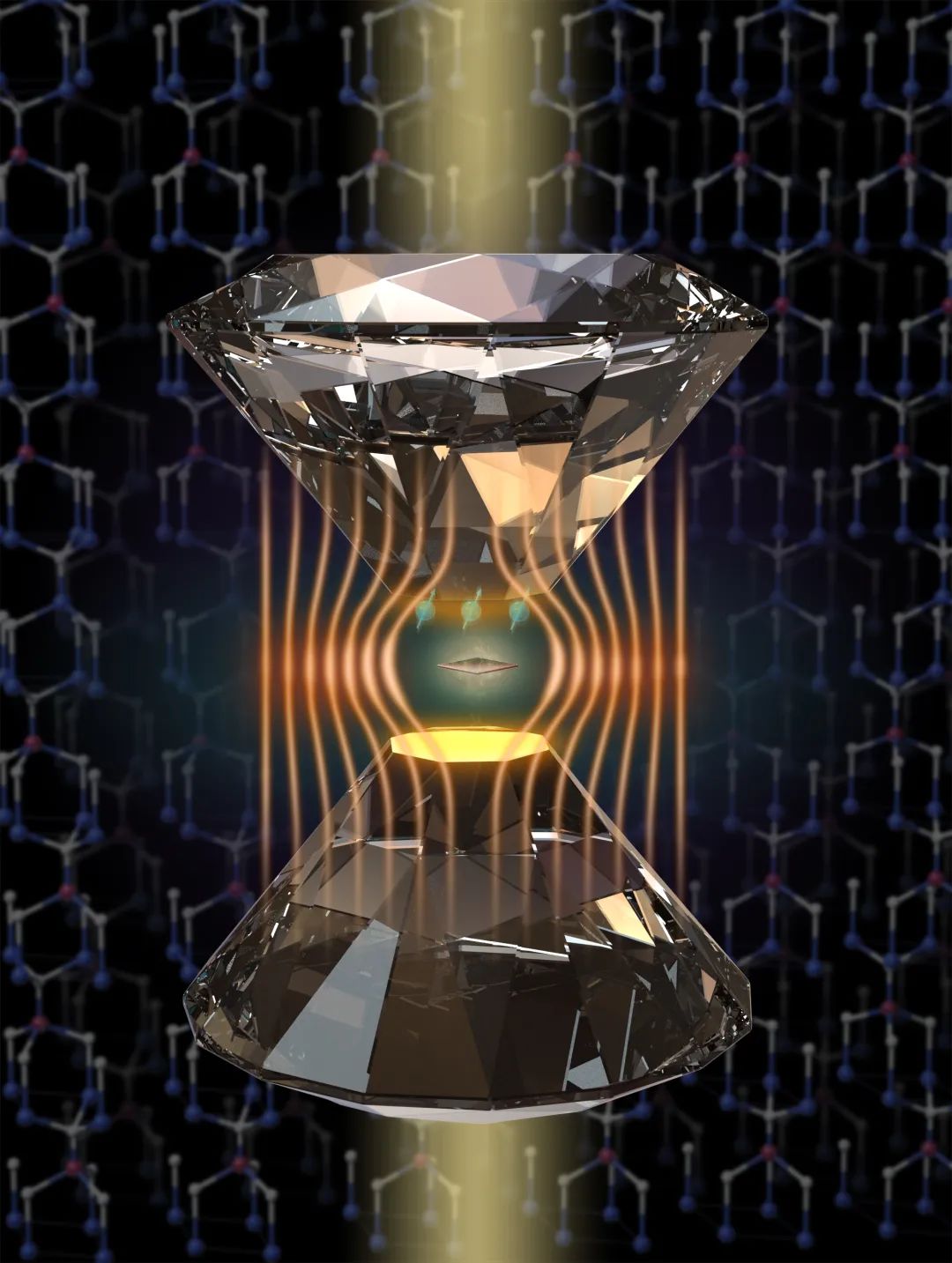
In today's rapidly advancing information age, sensors, as the key "touchpoints" of information perception and the "mother of data," have become deeply embedded in numerous fields, including industrial manufacturing, healthcare, daily consumption, environmental monitoring, and aerospace. Their performance directly impacts the operational efficiency and accuracy of various systems. Despite significant achievements over their long development, sensors are now facing bottlenecks in technological innovation and application expansion, resulting in a slowdown in growth and an inability to meet the demands of emerging industries and increasingly stringent parameter requirements. Quantum technology, like a beacon of hope, is opening unprecedented development pathways for the sensor industry, leading it into a new era of technological innovation and transformation.
Quantum Technology Injects New Vitality into the Sensor Industry
Since the 1980s, sensing technology has seen continuous innovation in sensitive mechanisms and materials, industrial production and processes, optimization and improvement of technical indicators, multi-parameter composite and modular design, as well as digitization, networking, integration, miniaturization, standardization, and low cost. After decades of technological and process iterations, the global market boasts over 31,000 sensor products based on eight major sensing technologies: sound, force, light, gas, magnetism, temperature and humidity, RFID, and bio-sensing. Long-term technological evolution has led to mature, even standardized, sensor principles and processes. The differences in function and performance are subtle, leading to fierce homogenization competition and increasingly limited potential for development. Major manufacturers lack breakthrough innovations in R&D, making it difficult to build unique competitive advantages, resulting in insufficient industry development momentum.
As the sensor application market expands into various industries, especially emerging industries such as autonomous driving, quantum communication, and precision medicine, which are rapidly rising, higher demands are placed on sensor performance. Traditional sensors are gradually showing limitations in detection accuracy, response speed, and anti-interference capabilities, making them unable to meet the needs of new scenarios. The emergence of quantum technology, particularly its application in sensor technology, has injected new vitality into sensor technology innovation, ushering in a new era of sensitive mechanism innovation and industrial transformation.
Quantum sensors possess characteristics such as ultra-high precision, high sensitivity, and ultra-fast response speed. They can break through the precision ceiling of traditional sensors, achieving extremely accurate measurements of physical quantities and reacting to changes in a very short time, meeting the needs of high-speed dynamic measurements and playing an important role in scenarios such as monitoring the trajectories of high-speed moving objects.
As a major representative of cutting-edge technology, quantum sensor technology has become a strategic high ground for countries to compete for. Developed countries, with their deep scientific research accumulation, strong financial strength, and well-established innovation ecosystems, have made early deployments and achieved many pioneering achievements in technological exploration and application expansion, occupying a leading position in international competition.
Developed countries and regions such as the United States, Japan, and Europe are leading the way in this field. The United States has invested massive resources in quantum technology R&D, with numerous top research institutions and companies actively participating, such as the California Institute of Technology and IBM. Significant achievements have been made in key technologies such as atomic clocks and quantum magnetometers, and they have already been applied in high-end fields such as military and aerospace. Europe emphasizes joint R&D of quantum technology, supporting multiple quantum sensor research projects through the EU Framework Programme, with prominent advantages in applications in quantum communication.
In recent years, China has seen rapid development in the field of quantum sensors. The government attaches great importance to this area, with continuous increases in research investment and significant achievements. Research institutions such as the Chinese Academy of Sciences have repeatedly achieved breakthroughs in basic research and key technological breakthroughs in quantum sensors, and independently developed high-precision atomic clocks have reached internationally advanced levels. In addition, some companies have proactively deployed the quantum sensor industry, actively promoting technological industrialization and application.
Quantum Sensors are Moving from the Laboratory to Practical Applications
Currently, quantum sensors are gradually moving from the laboratory to practical industrial applications. Data from market research firm Allied Market Research shows that the global quantum sensor market exceeded US$1 billion in 2024, reaching US$1.14 billion. It is expected to reach US$2.332 billion by 2026, with a compound annual growth rate of 17.7%. From a regional perspective, the Asia-Pacific region, with its huge market demand and rapid economic development, is expected to be the fastest-growing region, with a compound annual growth rate expected to reach 19.2%. Among them, China, as an important economy in the Asia-Pacific region, is expected to exceed US$10 billion in market size by 2030, driven by government policy support and increasing research investment.
Another market research firm, Grand View Research, reported that among the segmented markets, quantum magnetometers are expected to capture the largest market share due to their wide applications in medical, geological exploration, and defense sectors. At the same time, segmented markets such as quantum gravimeters and quantum gyroscopes will also show strong growth, with compound annual growth rates exceeding 18%. With continuous technological advancements and expanding application scenarios, the types of quantum sensors will continue to diversify. In the next 5-10 years, it is expected that more types of quantum sensors will be developed based on new principles and new materials to meet the diverse needs of different industries.
Research has found that quantum sensors can form relatively mature application scenarios in the following areas:
Medical Field: Utilizing high sensitivity, quantum sensors can detect minute changes in biomarkers, enabling early diagnosis of cancers, cardiovascular diseases, etc., and significantly improving cure rates. Atomic magnetometers can also detect the weak magnetic fields generated by brain neuron activity for brain function monitoring, and can create high-precision brain magnetic maps to assist in the diagnosis and research of neurological diseases.
Communication Field: In quantum communication, quantum sensors can be used to detect single-photon signals, ensuring the security of quantum key distribution and safeguarding secure information transmission. They can also perform high-precision measurements of the electromagnetic parameters of communication equipment to optimize equipment performance and improve communication quality.
Energy Field: In oil exploration, quantum gravimeters and magnetometers can be used for high-precision geological structure detection, improving the accuracy and efficiency of oil exploration and reducing exploration costs. Quantum sensors can also monitor the physical and chemical changes inside new energy batteries in real-time to optimize battery performance and extend battery life.
Intelligent Transportation Field: In the precise positioning of autonomous driving, quantum inertial navigation sensors are not limited by satellite signals and can provide high-precision and highly reliable positioning information for autonomous vehicles, ensuring safe driving in complex environments. Quantum radar can be used in vehicle-road collaborative systems to monitor traffic flow in real-time, enabling more accurate traffic flow prediction and intelligent traffic scheduling to alleviate traffic congestion.
Intelligent Agriculture Field: Multi-parameter quantum sensors can quickly and accurately detect nutrient content, acidity, and environmental meteorological parameters in soil, providing a scientific basis for precision fertilization, improving crop yield and quality. They can also monitor the physiological characteristics and environmental parameters of crops to achieve real-time assessment of crop growth status, promptly identifying problems such as pests and diseases and nutrient deficiencies, and taking corresponding measures for intervention.
In the field of financial security, quantum magnetic sensors can perform high-precision detection of the physical characteristics of currency, quickly and accurately identifying counterfeit currency and improving the security of financial transactions. They can also monitor the critical infrastructure of financial institutions, such as monitoring the temperature, humidity, and vibration parameters of vaults, to promptly detect anomalies and safeguard financial assets.
Multifaceted efforts to promote the research and development and industrial application of quantum sensor technology in China
With continuous breakthroughs and improvements in technology, quantum sensors are expected to be widely applied in more fields, promoting intelligent upgrades across various industries. In the future, quantum sensors will develop towards miniaturization, integration, and multi-functionality, deeply integrating with emerging technologies such as artificial intelligence and big data to inject strong impetus into the development of the intelligent era. To accelerate the research and development and industrial application of quantum sensor technology in China, the following suggestions are proposed:
First, strengthen policy support and guidance. The government should formulate special policies to provide preferential treatment to R&D enterprises in terms of taxation and land use, encouraging enterprises to increase R&D investment. Establish special funds to prioritize support for key technological breakthroughs, guide social capital into the quantum sensor field, and accelerate the transformation of technological achievements. At the same time, build an industrial development plan, clarifying phased goals and key tasks to provide clear guidance for the development of the quantum sensor industry.
Second, increase R&D investment and cooperation. Universities, research institutions, and enterprises need to work together to increase investment in basic sensitive materials, product process technology, and industry application research. Encourage in-depth industry-academia-research cooperation, build joint R&D platforms, integrate resources from all parties, and overcome technological challenges. For example, research institutions focus on cutting-edge theoretical research, universities are responsible for talent cultivation and technology reserves, and enterprises transform research results into actual products, achieving complementary advantages and accelerating the innovation process of quantum sensor technology.
Third, strengthen talent cultivation and introduction. Universities should optimize the setting of relevant disciplines, add quantum sensor-related professional courses, and cultivate compound talents with multidisciplinary knowledge in quantum physics, materials science, and electronic engineering. At the same time, introduce talent introduction policies to attract high-end overseas talents to return to China to engage in quantum sensor research and development, improving the overall strength of China's talent pool and providing intellectual support for technological innovation.
Fourth, establish a standard and regulatory system. Industry associations, together with research institutions and enterprises, should accelerate the formulation of technical standards and industry regulations for quantum sensors. Clarify standards for product performance indicators, testing methods, and quality control to ensure product quality consistency and reliability, promote healthy and orderly market development, and enhance the competitiveness of quantum sensor products and technologies in the international market.
Fifth, expand application scenarios and markets. Encourage enterprises to actively conduct market research, deeply explore the potential needs of various industries, and expand application scenarios. Strengthen cooperation with downstream enterprises to jointly develop customized solutions, promote the application of quantum sensors in emerging fields such as intelligent security and quantum computing-assisted monitoring, cultivate new market growth points, and expand market scale.
Sixth, promote coordinated industrial development. Build a complete innovation industry chain and strengthen collaborative cooperation among upstream and downstream enterprises. Upstream material suppliers and midstream device manufacturers work closely together to ensure the stable supply and quality improvement of raw materials; midstream manufacturers and downstream application enterprises communicate deeply to optimize product design and performance based on market demand, forming a good situation of mutual promotion and coordinated development among various links in the industrial chain, contributing to the vigorous development of China's quantum sensor industry.
Previous page
More news

Hotline
Technical Support
Address
No. 1, Building 1, Yin Cang Road, Green Industry Cluster, Quzhou City, Zhejiang Province
Follow us


Copyright © 2024 Zhejiang Nan Hua Electronic Technology Co., Ltd. | Powered by www.300.cn