

-
Products
-
-
-
-
Contact Us
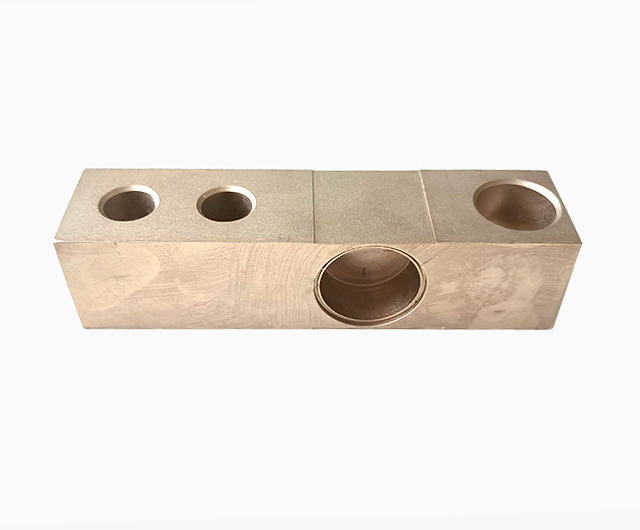
The lack of agricultural sensors has become a real constraint on the development of smart agriculture in China
2020-11-17
Sensors and digital technologies allow farmers to better understand the condition of their fields and crops. Proper use of this collected data can significantly improve crop yields and efficiency. Focusing on the interaction between various agricultural tools and sensor technologies can lead to significant advancements in agricultural practices.
For example, agricultural sensors can be used to monitor crop health, weeds, microorganisms and pests, yield estimation and prediction. This is equivalent to deploying IoT sensors as wearable devices in the air, soil, and on crops to establish a sensor network.
IoT sensors can be deployed on the ground or in water to collect data on relevant targets, such as soil moisture and crop health. The collected data is wirelessly stored in servers or cloud systems, and farmers can easily access this data via the internet on tablets and mobile phones.
An advanced sensor monitoring system should provide real-time feedback on temperature, humidity, light, soil pH, rainfall, and irrigation time. The system should be able to promptly identify key factors affecting crop growth. A cognitive system based on cloud computing services can learn in real-time from cases around the world, providing better solutions and suggestions on how to care for crops each season for better yields.
Currently, in China's smart agriculture, in addition to serious funding constraints and equipment that is not grounded in reality, the lack of agricultural sensors is a major practical challenge. This problem requires agricultural technology companies to provide practical solutions. For example, the development of smart agriculture is inseparable from smart agricultural machinery. China's agricultural machinery enterprises should use big data as the brain of agricultural machinery decision-making and strive to develop smart agricultural machinery with many functions such as query, scheduling, positioning, measurement, calculation, and management.
In May of this year, Zhao Chunjiang, an academician of the Chinese Academy of Engineering and director of the National Engineering Research Center for Agricultural Informatization, mentioned at the "2019 Smart Agriculture Youth Academic Seminar" that the future key development tasks of smart agriculture will focus on the research and development of agricultural sensors with independent intellectual property rights, the development of large-load agricultural drone plant protection systems, the development of intelligent tractors, the research and development of agricultural robots, solving the problem of agricultural big data sources, and the development of agricultural artificial intelligence.
Currently, many domestic companies are seeking new business opportunities in the field of agricultural Internet of Things applications. They are developing integrated systems that integrate sensors and communication systems. IoT sensors and cloud computing will greatly improve the quality of data flow, thereby helping farmers make better decisions.
Previous page

Hotline
Technical Support
Address
No. 1, Building 1, Yin Cang Road, Green Industry Cluster, Quzhou City, Zhejiang Province
Follow us


Copyright © 2024 Zhejiang Nan Hua Electronic Technology Co., Ltd. | Powered by www.300.cn